



Posts
190
Joined
6/19/2024
Location
LANSING, NY
US

Watching a bunch of "best in pits" videos Ive noticed that the majority, in fact the vast majority, are running the rear axle way back in the adjustment range
I see this on both 250 and 450 AND both indoor and outdoor AND ALL the bike brands, not just a few
way too many to be a coincidence
anyone know whats going on here?
Extends the wheel base and makes the bike more stable at speeds. I run mine as far back as I can as well.
Yepp, it's another tuning tool to use to refine the chassis. I would suspect that in SX there would be more variety than outdoors
If you watch any of keefer’s pit videos the teams also don’t reveal the length for some reason. But most keep it as a constant and make gearing changes internally if needed.
I understand the chassis dynamics and have done a ton of setup work including changing axle position
what I am saying is nearly Everyone is doing it and not just outdoor
I thought for sure I would see way less of it indoor but I see a majority doing it there too
Are we missing something? I supose as mentined above they may want to stability and then to make things a bit easyer always work from that setting even indoor?
The Shop
Luxon 4-Post Bar Mounts
$189.95 - $239.95
DeCal Works Huge Plastic Inventory of UFO and Polisport kits.
Free shipping: VITALMX
I have heard some guys talk numbers before with axle position, Keefer has mentioned it as well. I’m sure there is an optimum placement for traction/handling/suspension action
I think they’re running it long to help with the start.
I get the extra stability thing from added wheel base length, it makes perfect sense. I’m just curious what the added weight on the front end does for stability? I’d imagine more feel with the front end also?
I used to think it wasn’t a big deal, but last year I cut my chain too short , so I had to shorten my axle length all the way to the most it would allow. And WOW I noticed a difference! When I got into 3rd gear and higher I felt the bike get really uncomfortable and sketchy/twitchy at higher speeds. I did not like it one bit.
After going longer on the axle length it feels better, like everyone said more stable.
It’s a pretty big setup change for the reaction of the chassis, but also affects the way the shock reacts due to the point of torque being further from the pivot. I’d guess the pros prefer the stable feeling as well as being a base for suspension setup
That is why these style blocks have become so popular. They used to be even on both sides. This makes it so you haven't got that adjuster bolt out all the way.
Just imagine with some grease on the threads and holes in the upper hangers, what a sweet handling machine you will have…maybe even remove a bolt from the upper hangers….
I've found you loose front wheel traction when you move rear wheel back.
They can often be flipped to make 1 tooth change on the rear wheel so you dont have to touch the adjusters.
If you have a stiff shock setup but want small bump compliance, running the axle further back gives more leverage at the initial movement.
You would need a different length chain and it would be unusual if you didn’t have to adjust a little bit.
KTM has come with that style axle block for years.
I like threads about stuff like this. I used to do it most of the time. One of the exceptions when I discovered I didn't like it was on a 2005 YZ 250 smoker I had for a while. I felt like it was sluggish turning into corners and I ended up running the axle quite a ways forward.
Actually, the ONLY benefit of that style axle block is being able to change the rear sprocket 1 tooth without moving the adjustment bolts. In the picture you posted, that person could add 1 tooth, and just flip the block around to the short side and the chain would be at the same adjustment as before. The bolt doesnt care how far back it is. Contrary to popular opinion, that bolt is NOT structural and its only job is moving the axle.
Pit Row
Incorrect.
Another trick from back in the day was running a larger countershaft and rear sprocket. I forget what the advantage was, but I know it was a thing.
Sorry, I misread it and thought it said a one inch difference, not one tooth.
I went down this road last year.
The idea for larger sprockets was less squat to free the suspension during acceleration; because the angle of the chain fulcrum was larger. (Chain binding is what most people call it).
I tried it and I didn't notice any difference.
I'm curious why the swingarms aren't made longer if guys are maxing them to the point of gearing changes to get max length?
This. The current gen hondas for instance, "they say" the bikes handle the best with the tire in the rear most position. For 2026, honda made 0 changes to the platform, they could have added 1/2" to the swing arm for almost nothing. So, why dont they? If anyone knows about this, its Honda. I personally think its a preference thing that not everyone will benefit from
It's a good question. When I had a 2018 TC250 it cornered like crap, likely because the chassis was designed for a 4T engine. Fork height in the clamps and sag wasn't really doing what I wanted, shortening the chain and getting the shortest wheelbase possible helped a very noticeable amount. So it's clearly a tuning parameter worth considering.
So why is it on all the brands everyone still goes for max length? What is the condition that drives that?
For SX, we have whoops, tight bowl turns, and stiff suspension. I can certainly see how it might impact whoops. Chain torque maybe. I'm not seeing how it affects suspension that can't be compensated for with spring and damping, unless the extra height means you're in a different part of the ratio. I would think the tight turns would make shorter better, but with the berms, sticky rubber compounds, and always on fresh tires maybe that isn't problematic enough to drive setup.
For outdoors, with those gnarly bumps and long straights I could see stability being the driving force.
So why isn't the swingarm longer from the factory? My best guess is the stock length is best for mortals. Many bikes sold never even make a gate drop. Most of the bikes raced never reach the speeds of the bikes you're looking at.
Or it's monkey see monkey do. Possible, but not in my opinion likely.
Great question, maybe @Kris Keefer can pipe in.
longer back end:
Moves rider center of mass forward relative to wheelbase
Increases straight line stability
Makes turning radius bigger
Weights front tire in corners
Makes wheelies harder
1 link isn't going to be super dramatic, but it will make a noticeable effect.
I think they are going max length to help with starts, at the expense of a little maneuverability.
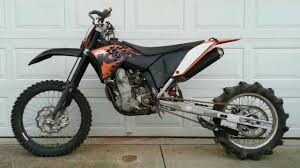
There is also the theorem that a chain traveling over a countershaft sprocket experiences drag due to the plates rotating at the rollers. A larger countershaft sprocket requires less angle at the chain roller, therefore experiencing less friction, drag and loss of power. I don't think that matters enough for me to notice, though!
I didn't go in to that because even if true, it would be negated by the heavier (longer) chain required. 😅
Post a reply to: axle position of the pros