



I have a 2017 KTM 350sxf I will be rebuilding the rear shock. First time I have done a rear shock, but I know I have the skill set to get it done. My question is, for those who have done it, I do not have a vacuum bleeder set up, and there seems to be 2 ways Youtubiversity tells me to bleed the shock.
1. Fill your bladder side with fluid, insert bladder, then fill your valving side full and press the valving in with it overflowing. press shaft up and down a few times to bleed the air. Seal it up then bleed the excess fluid from the bleed valve. (RockymountainATVMC source)
2. assemble the whole thing essentially "dry", then fill it through the high speed adjuster hole, pump the shaft several times, then use a bleed cup on the bleed screw port to do that again till no more air. (Highland Cycles source)
Just curios if you DIY'ers have a preference on what you have had better success with, thanks!









I do the the option #1 way you listed. As long as you keep from sucking air and having to restart (it WILL happen at some point…) it’s not that bad to do.
I went with the bleeder cup method. 3D printed my own cup to save money.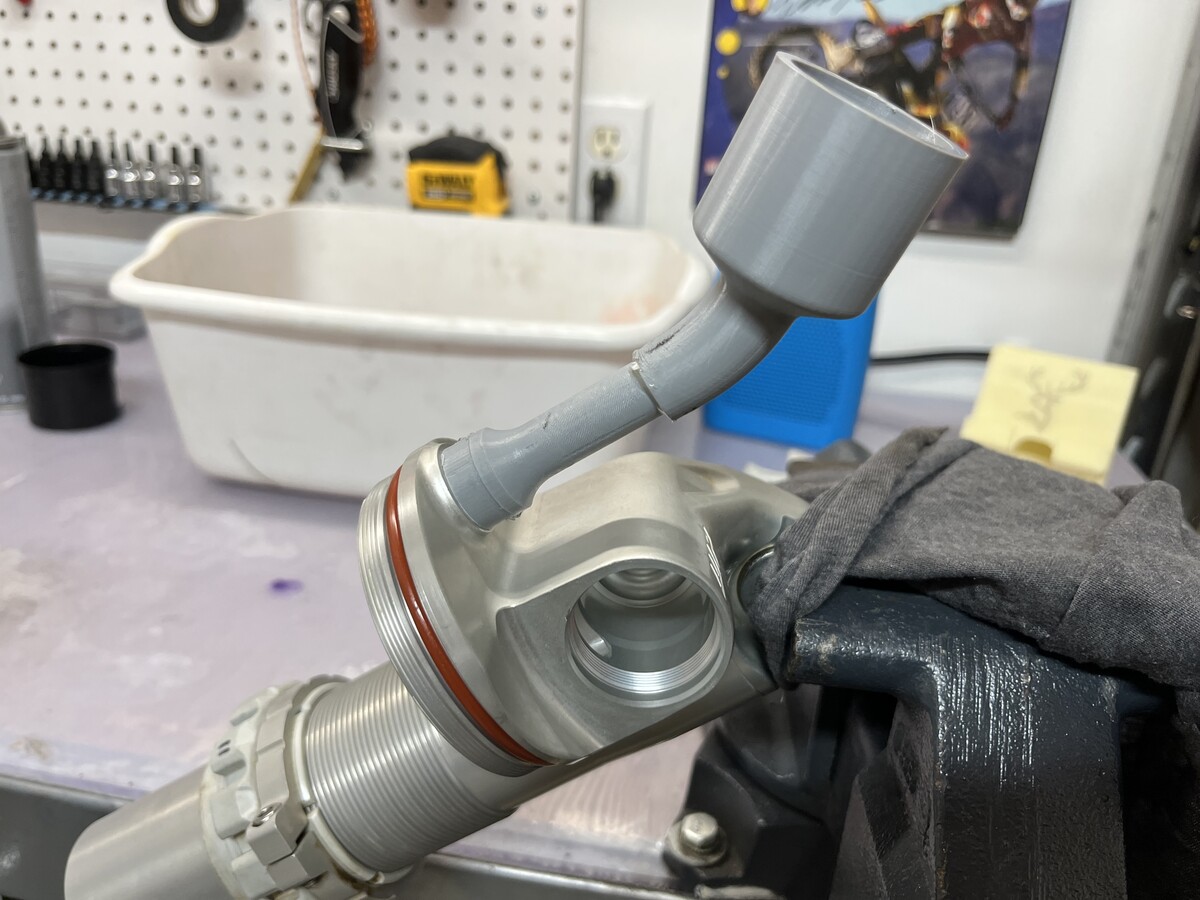
do you have a link to that file by chance? I didn't even think to do that, which is odd because I think about printing everything now.
I guess even a combo of both would ensure I have it bled well in the end.
The Shop
Luxon 4-Post Bar Mounts
$189.95 - $239.95
DeCal Works Huge Plastic Inventory of UFO and Polisport kits.
I do the second method WITHOUT the bleed cup. I fill it until it overflows, then install the adjuster. As you insert the adjuster it displaces the fluid and is "oil tight". If you watch UpAllNights youtube video he also drills a very small hole in the adjuster body for it to release what tiny bit of air is inside the adjuster body at the time if install.
I will have oil spray on the ceiling of my garage until the house caves in doing shocks, but at least I wear goggles now hahahaha. You got this! Don't hold your head over the fill port like me when you bleed lol and twist the shaft as you stroke to break the seal friction.
2017 is a piston reservoir, correct? Has your shock already been converted to a bladder?
I will be converting to a bladder with this rebuild, went with the JBI kit
Same thing I do on all my Austrian bikes on the 1st rebuild. Then go with basically your #1 method up top. A few other hints. After putting the bladder in, put a mtb shock pump on it and put about 10-20 psi in to seat the bladder cap and also to help the bladder keep its shape so it's not collapsing as you are stroking the shock to bleed it. You don't need the shock body to be overflowing when you insert the piston/rod assembly. Just need to make sure there's enough oil that the rebound bypass holes do not uncover when you come up on each stroke. Once you have it bled, then you can set your final oil height before you push the seal head down in. At that point you want enough oil that you're not trapping air below the o-ring or in the seal head.
Havent worked on that specific shock, but I use bleeder cups. Just a quart bottle cut in half, top half I screw on a gear oil type nozzle, then just thread that point into the shock.
You could just buy a crapload of shock oil and submerge the whole shock in it. lmao
would that even work @tk2stroke ? Sounds like crazy talk to me.
Trick I Learned from Rick Johnson (suspension guy) years ago. When installing the shaft and seal head, stroke the shaft a few times with out pulling out to far to let air back in. Smack the end of the shock with a rubber mallet. You will see a lot of tiny bubbles rise even after you have stroked the shock many times. This nocks off any air around the shims. Makes finish bleeding more accurate . Oil will not splash out when you smack it because of hydro lock .
Post a reply to: Question on bleeding rear shock