




For a lot of us, our favorite gear company is like our favorite sports team. Ours is the best and everyone else just isn't worthy. FXR is a gear company that has steadily been working their way into one of the elite brands. Through building relationships, listening to those wearing it and being willing to improve, as well as supporting many of the top privateers and teams, FXR is absolutely worthy of being a premier gear company. Andy White, MX Division Brand Manager, visited with us about how he got involved with FXR, their business model, and what the future holds.
For the full interview, check out the YouTube video right here. If you're interested in the condensed written version, scroll down just a bit further.
Jamie Guida - Vital MX: FXR as a brand is growing every year, but before we actually get into that, I want to talk about you a little bit. How did you get into motocross? What was your trajectory through the sport early?
Andy White: Well, as a kid riding BMX bikes and stuff like that. Some of my friends had dirt bikes and I hopped on one when I was about 11, 12 years old. I twisted that throttle, and I couldn't believe the feeling of being propelled along the dirt by twisting a throttle and all the cool power. I think it was an RM50 or something that I rode. I couldn't believe how cool this thing was, and I was just hooked immediately. I think I ran home and told my dad, “I tried a dirt bike” and my dad's like, “Are you crazy, these things are dangerous”. He asked, “Your friends have ‘em?”. And I'm like, “Yeah, all the all my buddies have them”. We lived just outside the city. So, there were trails and tracks and he said, “Well, if you save up some money, I'll help you out and I'll chip in half”. And I think I cut everybody's garden grass that summer and shoveled every driveway possible to save up money and went out and bought a dirt bike. It was a little YZ’ed 80 and started riding with everybody and I was hooked. That was that. It's in my blood and I don't think it'll ever go away. I think from the age of 13, I've ridden every year of my life; racing, riding, whatever, and I’m still addicted to it.
Vital MX: I love that you came from a family that didn't ride but fell in love with the sport and your family, your dad supported it. That's really cool.
Andy: Yeah, he did. He rode street bikes and stuff when he was younger, and he knew that they were cool, and it was maybe something I'd get into later. He wanted to make sure that I started off right. So, we went to the bike shop, and we got a Bell Moto 3, that yellow school bus color helmet, and started with that and some Scott goggles and some motocross gear and boots and made sure that I was all dialed in. I started riding with my buddies and some of the older guys were telling me, “Man, you're really good for a guy on these dirt bikes”. They’d never seen me before. They were telling me I should go race, but I was too young to drive or anything. I had to get rides to here and there and everywhere. But that was the cool thing. I could just ride from the house and ride with my buddies all day, all summer. Leave at eight in the morning and come back at eight at night. We would borrow, begs, steal gas and oil from whatever and put it into our bikes and just ride forever and ever and ever. And it was so much fun.

Vital MX: I'm sad for this generation of kids that don't really have that. Where you can just go all day, go hang out with your friends all day. Kids don't live that way anymore.
Andy: No, they don't. The funny thing is, as an adult now and in my fifties, I can't wait to go out to the tracks on the weekends and hang out with my buddies. We go out and do a couple of motos, and then we come in and we bench race and take cheap shots at each other about our riding or some race history. And it's still going on, you know, 30, 40 years later with some of the same guys. We enjoy getting together and having a lot of fun talking about riding and go out there and do six, seven, eight laps and come back and talk about it. And we're already pumped for the next weekend. It just will not go away. And I'm very happy that I found this passion in the sport and hobby and now fell into a job that is involved in the same industry. I'm probably one of those 6%’ers of people where it's a hobby and I love my job at the same time.
Vital MX: As far as racing, you did progress to a point where you did some Canadian Nationals, and you had a fairly successful amateur and semi-pro career.
Andy: I did. I was lucky. I met a few riders that were a lot quicker than I was close to where I lived, and they coached me and helped me, and I moved through the ranks pretty quickly. I won a bunch of amateur championships and then I hopped into pro with an attitude, and I just got smoked. The first pro race I was in, I couldn't believe how fast these guys were going. It was back to the drawing board, and I had good help from Yamaha and Honda and some local dealers. So, I got pretty lucky, and I trained, and I worked hard and put a solid effort into it. I saw what some of the other pros were doing and figured, you know, this is the only way you're going to do it, by hard work. It's not going to come to me. So, I did that and followed the Canadian Nationals and got some top ten finishes. During the winter I would shoot down south to Florida and race the Florida Winter AMA's and Daytona Amateur Supercross and some other events. New England was big too because that's only a couple of hours away from me. Southwick was massive for me to ride down there. I got to ride with guys like John Dowd, Keith Johnson, and Treadwell and guys before them as well. I really enjoyed those years of racing pro. But as you get older it gets harder. I was lucky the vet classes started popping up, the Plus 25 and 30s, and I fell right into those categories perfectly and it allowed me to keep on racing for forever.
Vital MX: You transitioned into an industry job at some point through hard work. You had your own suspension company and a dealership. Talk about those things and how they eventually led to you working for FXR.
Andy: When I was racing Pro, one of the guys that lived not far from me had a suspension company and needed someone to help test. I started testing for him. I got to learn more about suspension. And before I knew it, I was working in the shop revalving, and tearing stuff apart and we had a couple other guys in there and it was a lot of fun. I became more marketing and sales guy for the suspension. As I was out at the tracks riding, my competitors would come over and want their suspension done. I was racing pro, competing against other pros that had my suspension on it. So, it was a little bit weird, but they had confidence that I would set it up great for them. I was a very smooth rider when I was young and still am, and they saw how well I rode and they figured if I'm riding the stuff, it's got to be good. And back then there wasn't a lot of choices. My business partner and I officially opened up a shop here in Montreal and then we franchised them across the country to five other locations and then into the US. That was in the late eighties and all through the nineties and we had a great business going. We met a lot of people and connected to a lot of suspension guys. That led into actually owning a dealership in Montreal, a Honda KTM dealer named Diablo Performance. I ended up starting a race team with the help of Honda Canada, and we brought up Mike Treadwell and Keith Johnson. We had guys like Marco Dubé, Doug Dehaan and Mitch Cooke. I mean, it just goes on and on of all these riders that we had. It was a lot of fun crossing the country, doing the Canadian nationals and stuff.
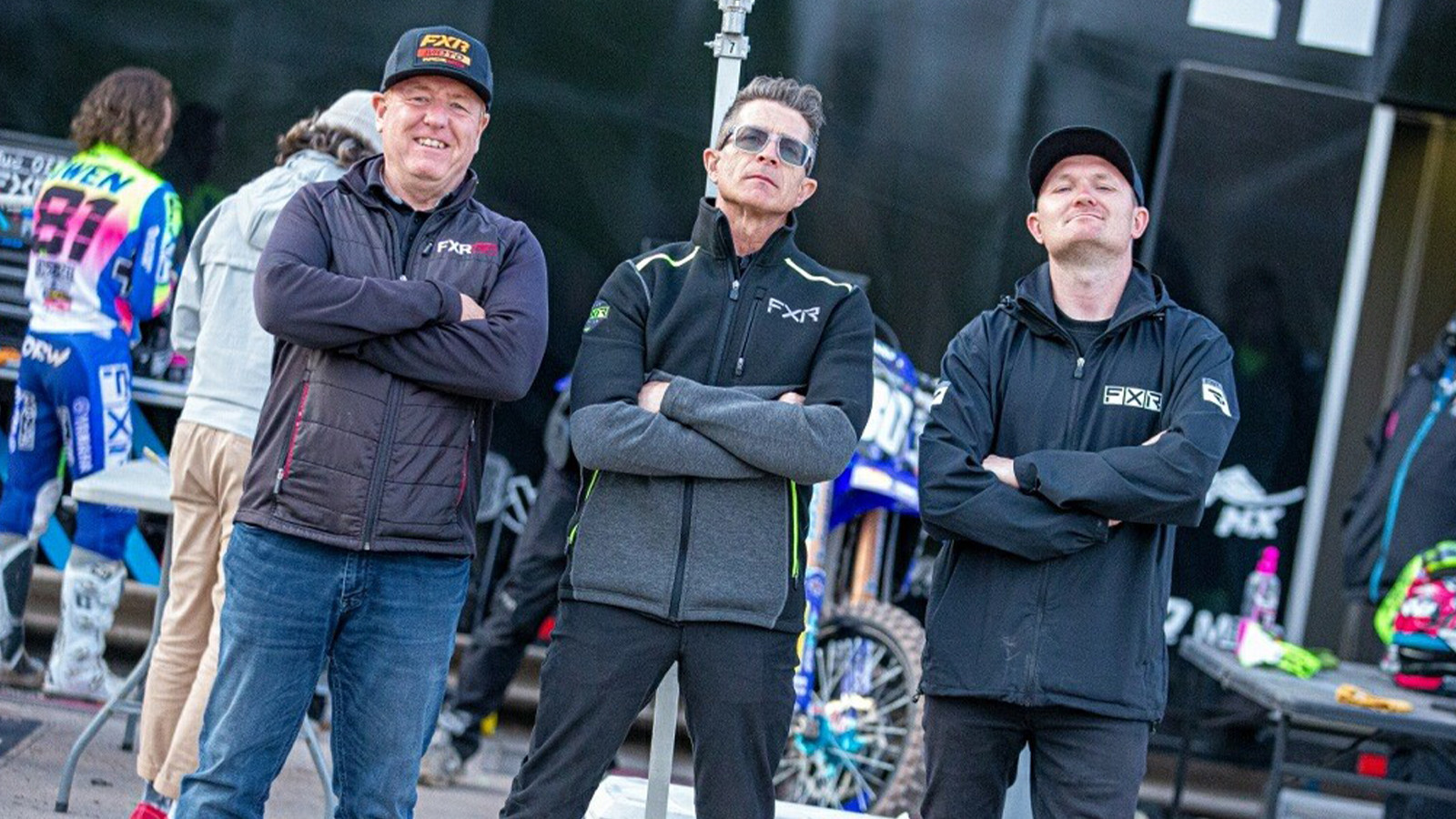
Vital MX: How did you get involved with KTM Canada?
Andy: One day I had an email from a friend that worked at KTM Canada and said they were looking for a Marketing Race Director for the Canadian division. I applied and got the job in 2004. It was hard to find riders back in the day to ride KTM's. The off-road version was bulletproof, but the motocross version in North America was pretty nonexistent. Nobody really wanted to ride them. They didn't have linkages on them, they were European, so it was a hard sell. With the help of my boss at the time, Kurt Nicoll, I was working with Larry Brooks, then Casey Lytle, Michael Sleeter, then Kris Keefer. All these guys were part of the team program that I worked with. They helped develop this great bike, and before we knew it, we had people pounding on our door wanting to ride these wicked fast KTM's. I ran the KTM program for ten years, and after ten years I felt it was time for a change. I decided to look at other avenues and FXR was looking to push their motocross line. They had introduced it a few times prior, but with no real success. They were very, very successful in the snow division for Snocross, and they felt that it was time to branch out. A lot of their Snocross pros in the summer would ride moto and the owner really didn't like it that they would wear competitive gear like Fox, Fly, Shift, or whatever. So, he went out and decided to make some FXR moto gear. And it was good gear, and the timing was perfect. I was looking for a new adventure and the owner, Milt Reimer, and an assistant Aaron, saw that maybe I was the guy to do it and they gave me the reins to the Moto Division. We connected with some cool designers and hooked up with some riders to help promote it, like the Mike Brown's, Keefer's, and Alex Rays back then and some other guys. And here we are, what is it, seven years later, racing in front of the world's best riders in Supercross and MXGP, outdoor nationals, off-road, cross country, hard enduro. I mean, we're in all the different categories now and life is good and we're loving it.
Vital MX: FXR has come a long way in seven years. A lot of that the success comes from the relationships you've built prior. This industry is small, and it takes good relationships and a lot of trust from people within the industry to give you the chance. What were some of the key factors in the success early in FXR?
Andy: I would say relationships are very important to get riders to wear the product. They might have been with other companies or other partnerships, and for them to trust you and to work with you on developing better gear and getting feedback. I was lucky Milt Reimer is just crazy about moto. He loves moto. We talk about moto every single day. He rides three or four days a week, so he's heavily invested. Same with the team. We have a lot of employees that ride moto, so we're all passionate about it so we can all talk the talk and understand it. When I would bring riders on the program that I felt were the key guys like Mike Brown, they knew Mike Brown the name, the legend Mike Brown. And he's got a great history and a lot of followers. And they're like, “okay, this is a great person to work with. Let's do some testing and development and get some product on them and see where we're going”. The same thing happened with Keefer back in the day. We were using him on the side while he was working with other people and paying for testing and the honest truth. Keefer is brutal when he tells you that something's not right, he tells you and sometimes it hurts. You don't want to hear that, but you need those comments and information to make your product better. And with the many years of working at KTM, I had made a lot of good friendships. Making sure that these riders got paid back in the day, they trusted you. They knew you had their back on FXR and that they would be paid for it. And they did. And word of mouth is sometimes the best advertising, and it just snowballs and snowballs and got bigger and bigger and bigger. And now we're dealing with factory teams and top riders and managers and large media outlets all around the world. And you're right, it was a short amount of time for us to go from barely producing any gear to where we are today. The people that I work with, they're so passionate about it and the riders and media and everybody that I know to help us get it to that level. It just wasn't me. It was a lot of people that were behind this and still are helping and excited about our product. And when you've tried our product and you're, “Wow, this is super comfortable. It fits great. You have different colors, different styles, stuff for the kids, stuff for the adults, Vet riders…”. Vet riders absolutely love our product and vet riders are very outspoken and they find something they like; they're going to tell everybody. And that's fantastic.
Vital MX: You mentioned word of mouth being a key factor, especially with the vets of the sport, the weekend warriors. But you still have to do advertising. FXR chooses to advertise with Vital MX, Pulp MX, magazines, and even the Mad Skills MX game. Also, you support teams such as Michael Lindsay's Honda Chaparral Team and ClubMX. How do you decide where you put all your focus? The return on investment has to be different from each of those.
Andy: Well, in the US, there's quite a few media outlets and every one of them has a different demographic or an angle that they focus on. If you all went to the same person, then you probably wouldn't all be successful. I research them and figure out if it’s an avenue that we want to go down? “Is this the right customer base”? We test the waters, we'll throw some money at it, do some ads and follow the click through and see what the numbers say. And if things are in our favor, we'll continue to advertise and invest more money into it. Sometimes on race teams, some teams don't do so well, some teams do well. Michael Lindsay's team was great. They had Coty Schock on the team, and he was a showman. He would be posting stuff in the day and the night; he'd be posting ten times a day. And people loved his images. Mumford was great to follow. We picked the teams that have got good athletes and Michael Lindsay loves talking and talking to everybody. So, we thought that would be a great way to get the word out. ClubMX is another great one. We're so happy to be with Club. They have a great following, a great facility on the East Coast. A lot of amateurs go through the program. They've got a good team. I mean, Phil Nicoletti is awesome. He writes for RacerX, he's on the Pulp Show, so he's got a great character. I was walking around with him at Redbud, and it was like walking around with a Hollywood superstar. Everybody was, “Hey, filthy, what's up”? They wanted a piece of Phil and shake his hand and get his signature. I like that. And I'm pumped that these guys are getting attention. And if I can help them out financially a little bit to help brand our product, then so be it.

Vital MX: When it comes to one-off, special gear for special events or even sublimation, that's expensive stuff. That's not easy to do for a small company. How do you choose when you're going to do special things like that?
Andy: Well, it is very expensive. The quantities are very, very low. So, the margins are slim. It's more of a branding tool than anything to get our word out there and to offer some really good quality product. Limited edition. So first come, first serve. And the kids that we support and our customers, they watch for these drops all the time. And I see the numbers of product leaving the warehouse on a daily basis with my reports. I'm just at a loss for words sometimes. How some of the color waves sell so quickly and some other ones maybe not sell so quickly. So, it's a good tool to judge on colors and what time of the year to drop stuff. I think these kids are super pumped to wear something that maybe someone else in their state or in their area doesn't have. We do this a couple of times a year and it seems to work for us.
Vital MX: What's the five- and ten-year goals for FXR? Title sponsorships, “elite” riders?
Andy: I would say the five year is to continue at this level, making sure that we sell through our products, understanding the market and getting through some tough times after COVID, but continuing to grow our business. I think we're in 43 countries right now around the world, and we'd like to be in many, many more and support some possible, maybe higher-level riders down the road once more revenues come in. But our growth is very, very good right now, and it wouldn't make sense to go and hire a 500 or 600,000 rider where our growth rate is now. How much more upward could I go than what I'm at right now? I have a hard enough time delivering what I'm bringing in. If I spend that kind of money, I have to bring in another two or $3 million of products to pay that rider half a million, and I'm not ready to take that risk at the moment. We're just analyzing it and growing as we need. We have some great high-end riders. Jeremy Martin, he's a top athlete. Marchbanks is another great one that we've got on the program. Nicoletti is also a top rider. Maybe they're not Tomac, but they're not too far off.
Vital MX: I don’t know that an Eli Tomac really sells that much more gear than another rider anyway.
Andy: It's an expensive question. And some of our competitors that have high end riders also have very thick catalogs of other products that they can fall back on. We don't sell tires and chains and sprockets and oils and chrome. I don't have that as a revenue to bring in to help pay for a rider. I'm using the monies that I have available from our gear sales. We're working off what we have and being smart about it and making sure the bills are paid and we're growing and investing in the future. We're growing at a very good pace and maybe down the road we will have one.

10/30/2022 2:52pm
0 comments
To post, please join, log in or connect to Vital using your Facebook profile Login with Facebook.